
Quick Nav
- Jacks or Better and Deuces Wild Reward Different Hands
- Inspecting the Complete Video Poker Payout Schedule
- Aligning Holding Choices With the Active Game
- Replacement Draw Probabilities and Expected Value
- Structured Practice Blocks and Spending Controls
- Completing the Five-Point Pre-Play Verification
Paytable Selection and Card Holds Shape Your Expected Cost
Two distinct actions determine what you risk in video poker: choosing a payout schedule before the deal and deciding which cards to retain after the initial five cards appear. Selecting a weaker payout schedule lowers the return on specific winning hands across every round you play. Discarding the wrong card during a hand directly reduces the expected payout from that specific deal.
Claims of a low house edge in video poker depend entirely on the active rules, the exact payout schedule, and the accuracy of your holding decisions; the format does not grant an automatic mathematical advantage over table games. A disciplined review follows a strict three-step sequence. First, identify the exact game variant on the screen. Second, inspect the complete payout schedule from top to bottom. Third, apply the specific holding strategy designed for that combination of rules and payouts.
Jacks or Better and Deuces Wild Reward Different Hands
Standard five-card draw video poker follows a single deal-and-draw cycle. The interface deals five initial cards face up. You mark which cards to hold—meaning the specific cards retained for the final evaluation—and the game replaces the unselected, discarded cards in a single draw from the remaining deck.
While the mechanical interface remains identical across machines, the underlying rules change how cards are valued. Comparing Jacks or Better against Deuces Wild illustrates why a generic poker instinct fails when moving between variants.
| Game Feature | Jacks or Better | Deuces Wild |
|---|---|---|
| Wild Cards | None; all 52 cards play at their face rank and suit. | All four twos (deuces) substitute for any rank or suit to improve a hand. |
| Lowest Qualifying Hand | A single pair of jacks, queens, kings, or aces. | Three of a kind; two pair and single high pairs pay nothing. |
| Premium Combinations | Royal flush, straight flush, four of a kind, and full house. | Natural royal flush, four deuces, wild royal flush, and five of a kind. |
| Strategy Reference Structure | Single unified chart matched to the exact full-house and flush payouts. | Segmented chart branching by whether 0, 1, 2, 3, or 4 deuces appear in the initial deal. |
Jacks or Better operates without wild cards. Because the payout schedule starts at a pair of jacks, queens, kings, or aces, retaining high cards and low-tier made pairs forms the baseline of play alongside conventional poker hands like two pair, three of a kind, straights, flushes, and full houses.
Deuces Wild alters the deck's mathematics by turning all four twos into wild cards. Because wild cards make hands much easier to complete, the payout schedule eliminates rewards for high pairs and two pair, starting its lowest return at three of a kind. It also splits top-tier payouts into specialised categories: a natural royal flush (a suited ten, jack, queen, king, and ace completed without using a wild card), four deuces, a wild royal flush, and five of a kind. Because a single deuce transforms the probability of completing these hands, a Deuces Wild strategy guide splits into separate decision trees based on the exact count of deuces dealt in your starting five cards.
Inspecting the Complete Video Poker Payout Schedule
Before placing a wager, audit the machine's interface through a step-by-step inspection. Locate the exact game title and rule summary on the screen, then read down every paying-hand row and across every credit column. Verify the coin denomination selector and the number of credits wagered per hand to calculate your true financial exposure. Total stake equals the credit denomination multiplied by the number of credits wagered; reading the credit count in isolation hides the actual amount of money at risk.
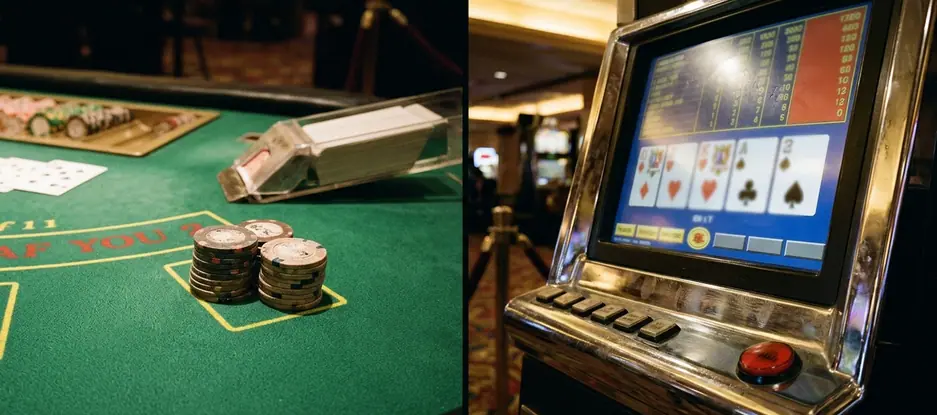
Reviewers use the term full-pay to describe a recognised, top-tier payout schedule within a specific video poker variant. A prominent top prize for a royal flush never establishes a full-pay schedule on its own. Two Jacks or Better machines sitting side by side can display identical royal-flush prizes across every credit column while offering different rewards on the middle rows.
Consider a qualitative side-by-side comparison of two Jacks or Better schedules. Both machines display the same top payout for a royal flush and the same return for four of a kind. However, the second schedule reduces the payout on the full-house row and the flush row by a single credit per coin wagered. Because full houses and flushes occur far more frequently than royal flushes during regular play, trimming those middle-row payouts directly lowers the game's overall expected return.
Paytable Edit Distance
Treat schedule comparisons with the precision of measuring Levenshtein distance between two text strings: a single-digit change in the full-house or flush row alters the mathematical identity of the entire game. When evaluating Deuces Wild, apply that same line-by-line scrutiny across natural royal flushes, four deuces, wild royal flushes, five of a kind, and all standard hands.
Next, read horizontally across the credit columns for the same hand. Check whether each payout scales proportionately with the number of credits staked, or whether wagering the maximum credit column triggers a disproportionate jump on the royal-flush line. However, a royal-flush credit-column improvement is a payout comparison, not permission to cross the preset spending limit; settle the affordable total stake before acting on that relationship. If the maximum-credit setting pushes the total monetary stake above your budget, step down in denomination or do not play the machine.
Aligning Holding Choices With the Active Game
Once the paytable is verified, card retention relies on expected value. Expected value is the sum of every possible replacement outcome's payout multiplied by the exact probability of drawing that outcome, measured against a constant stake. In video poker, the hold that produces the most frequent winning outcome and the hold that yields the highest expected value are frequently two different choices.
Break the decision into two checks: the full-house and flush rows determine part of the Jacks or Better schedule's value, while J♥ J♣ Q♥ K♥ A♥ creates a separate pair-versus-four-card-royal holding decision. Let us walk through that exact Jacks or Better hand to see how a strategy reference resolves competing holds:
- Identify the dealt cards and rules: You hold J♥, J♣, Q♥, K♥, and A♥ on a verified Jacks or Better schedule.
- Map the competing holds: Candidate Hold A retains J♥ and J♣, locking in a paying high pair while discarding three cards. Candidate Hold B discards the J♣ to retain J♥, Q♥, K♥, and A♥—an incomplete premium hand consisting of four suited cards toward a royal flush.
- Evaluate the conflict: Candidate Hold A guarantees at least an even-money return on the pair of jacks, with a small chance of improving to two pair, three of a kind, a full house, or four of a kind. Candidate Hold B sacrifices the guaranteed high-pair return to draw one card to a royal flush, while retaining backup outs for a regular flush, a straight, or a replacement high pair.
- Apply the schedule-specific reference: Rather than relying on the apparent security of the made pair, consult the strategy chart built for that exact payout schedule to select the hold with the higher probability-weighted return. An optimal holding strategy applies to its specified rules and paytable, so match both before using it.
Branching Holds in Deuces Wild
Now consider a Deuces Wild hand showing 2♣, J♥, Q♥, K♥, and 7♣. Here, the three hearts are both suited (sharing the same suit) and consecutive in rank (jack, queen, king). Because the 2♣ acts as a wild card, it can substitute for the ten of hearts or ace of hearts to form a four-card wild royal flush draw alongside J♥, Q♥, and K♥, or pair up with the 7♣ for a lower combination.
To resolve this hand, you must ignore Jacks or Better logic entirely. Locate the one-deuce section of a Deuces Wild strategy chart matched to your active paytable, and follow its exact hierarchy for suited high-card draws paired with a single wild card. After studying both examples, run these specific card combinations through a free video poker strategy trainer configured to the identical payout schedule until the correct holds become automatic.
Replacement Draw Probabilities and Expected Value
Every holding choice alters the combinatorial math of the replacement draw. In a standard 52-card deck, dealing five initial cards leaves exactly 47 unseen cards in the draw pool. Discarded cards are set aside and cannot reappear on the replacement draw.
If you hold four cards, the game draws one replacement from those 47 remaining cards, giving 47 possible outcomes. If you hold three cards, the game draws two replacements from the 47 unseen cards, multiplying the possible two-card combinations. Crucially, the exact identities of all five initially dealt cards change which payouts remain alive. In our earlier J♥, J♣, Q♥, K♥, A♥ example, throwing away the J♣ removes one club and one jack from the available pool, slightly reducing the probability of drawing a replacement jack on the final card while leaving all remaining hearts live in the deck.
This mechanical reality separates the probability of winning any payout from the expected value of a hold. Retaining a made paying hand—such as a low-tier three of a kind or a high pair—produces a high frequency of small returns. Breaking a made hand or bypassing a safe pair to hold an incomplete premium hand shifts the outcome distribution: you will experience more losing draws in the short term, balanced by access to rarer, much larger payouts that carry significant weight in the expected value calculation.
Understanding three mathematical terms keeps expectations grounded during a session:
- Theoretical return: The long-run expected share of total stakes paid back to players when following the designated strategy under a specific rule set and payout schedule.
- House edge: The corresponding long-run share of stakes retained by the operator.
- Volatility: The dispersion of outcomes around that average, shaped by how heavily a paytable concentrates its return in rare top-tier hands versus frequent lower-tier hands.
Because rare premium hands contribute a substantial portion of the theoretical return, actual playing sessions regularly produce prolonged losing stretches while waiting for top combinations to land. Furthermore, every fresh deal comes from an independently shuffled 52-card deck unaffected by prior rounds. A long losing streak never makes a royal flush or four deuces due on the next deal. Judge your play solely by whether your hold matched the applicable strategy chart before the draw, never by whether the replacement card happened to connect.
Structured Practice Blocks and Spending Controls
Before risking funds, use a free-play demo or strategy trainer to learn the physical interface without financial pressure. In my review sessions, I run a structured 10-to-15-minute practice block whenever evaluating an unfamiliar game interface. Note that a 10-to-15-minute practice block is simply an illustrative learning exercise to familiarise yourself with the screen controls, not a benchmark of competence or readiness to gamble.
During a practice block, execute four specific checks before hitting the draw button:
- Read the entire payout schedule and confirm the active credit column highlighted on the glass.
- Click a card to verify how the interface marks a hold, then click it again to practice clearing the hold.
- Confirm which unmarked cards will be discarded when the draw button is pressed.
- Check the denomination display and credit selector to verify the total stake calculation.
If you transition from a demo screen to a real-money lobby, recheck the exact game variant and read the complete payout schedule from scratch; operators frequently run different paytable configurations between free-play demos and cash games. Australian readers must also check applicable local gambling rules before considering real-money access, as providing online casino games to people located in Australia is prohibited under federal interactive gambling legislation.
Where real-money play is legally accessible, establish strict session boundaries before the first deal. Set a firm maximum affordable loss and a hard session end time, and treat demo-mode winning streaks as irrelevant to what you can afford to stake in cash. Video poker allows rapid hand completion, meaning fast clicking directly multiplies the total amount wagered per hour. Slow down your decision pace and take scheduled breaks away from the screen to reduce the volume of hands played. Never raise your credit denomination to chase prior losses, never borrow money to fund play, and never view video poker as a source of income.
Completing the Five-Point Pre-Play Verification
Consistent discipline in video poker relies on separating game selection from in-hand execution. Finding a full-pay schedule does not protect your bankroll if you guess at holds, and memorising a strategy chart cannot overcome a short-changed paytable. Even when you combine a strong schedule with accurate holds, variance ensures that a mathematically sound decision will still regularly result in a losing replacement draw.
Pre-Deal Verification Sequence
- Exact Variant: Confirm whether wild cards or bonus rules are active.
- Complete Payout Schedule: Audit every row, paying close attention to full-house and flush returns.
- Total Stake: Multiply the coin denomination by the active credit column.
- Matching Strategy Reference: Load the chart built for that exact variant and schedule.
- Preset Spending Limit: Lock in your maximum affordable loss and time cap before dealing.
Open the paytable in practice mode, identify the exact variant, and match it to the strategy you will use before staking money.