Quick Nav
- Which invoicing API fits your renewal flow?
- Measure recovered invoices against integration work
- Stripe Billing: test the existing payment stack first
- Paddle: check who owns the invoice and customer relationship
- Chargebee: assess a separate subscription billing layer
- Recurly: scrutinise failed-renewal handling
- Zuora: test complex contracts before committing
- Run the same failed-invoice test across all five
- Choose an API with a controlled rollout
Which invoicing API fits your renewal flow?
“Which invoicing API gives your team more control over failed renewals without creating more billing maintenance than it saves?”
That question drives the evaluation of any modern billing system. We define involuntary churn specifically as a renewal lost to payment or invoicing failure. Customers actively choosing to cancel require product interventions. Payment failures require engineering and operational safeguards. We will introduce Stripe Billing, Paddle, Chargebee, Recurly, and Zuora as systems to investigate for this purpose. Treat them as candidates for your architecture rather than sources of guaranteed recovery.
Compare each candidate against renewals due in the next 30–90 days. Use your existing subscription and invoice records as the baseline for this evaluation. Unlike legacy integrations relying on basic _xclick form posts, modern billing APIs require stateful synchronization between the payment gateway, the invoicing engine, and your application database.
Measure recovered invoices against integration work
Trace one renewal from invoice creation through payment, notification, and ledger entry. Gaps in that trace help you decide which integration checks deserve a prototype. Assess the renewal events, failed-payment handling, customer messages, reconciliation, and reporting capabilities of each platform.
Engineering teams must separately test webhook delivery, idempotency keys, sandbox coverage, API versions, and the migration of active subscriptions. While API documentation outlines optimal recovery paths, actual retention depends heavily on the underlying payment processor's decline codes. You need to define useful cost-benefit measures for a proposed 30–90-day observation window. Compare the recovered invoice value with payment and platform fees, support tickets, and the engineering time spent maintaining the flow.
Baseline Integration Checkpoints
Breakdown: one failed renewal becomes a webhook, an application access decision, a customer message, a paid invoice, and a ledger entry. Compare candidates at each handoff to understand the true operational cost.
Stripe Billing: test the existing payment stack first
Stripe Billing operates as a strong candidate for teams already using Stripe payments. Keeping a single provider reduces vendor sprawl. Keeping one provider is not, by itself, evidence that subscription migration will be easy. Developers must verify invoice lifecycle events, retry configurations, and how failed renewals appear in their own application.
In a sandbox environment, record the invoice identifier, failure event, retry setting, and application access state for one renewal. Inspect events from the initial failed attempt through a configured 1–7-day retry window. Use the team’s actual configuration when assessing fees or recovery outcomes. Review the Stripe Billing documentation to map these lifecycle events into your application’s existing renewal states.
Paddle: check who owns the invoice and customer relationship
Position Paddle as a candidate when the business is evaluating a different commercial and billing model. As a merchant of record, Paddle changes the fundamental mechanics of the transaction. Establish the proposed commercial relationship before estimating engineering effort. Identify who issues the invoice, handles tax obligations, and sends payment-related messages to the customer.
Request sample invoice fields, customer-message templates, and API payloads for a failed renewal and a later paid invoice. Review the customer-facing sequence from the failure date through the following 1–7 days, alongside the current contract terms. A simpler internal workflow provides value only if its contractual and customer-experience trade-offs suit the business.
Chargebee: assess a separate subscription billing layer
Explore the case for a dedicated billing layer when subscription logic has become difficult to maintain in application code. Chargebee sits between your application and your payment gateway. Map existing subscription rules maintained in application code. Test whether a separate billing layer can represent those rules without creating ambiguous records between billing and payment systems.
Test a plan change and renewal. Match each resulting invoice, subscription change, and payment-provider event to the application’s subscription ID. Sometimes matching customer records across disparate systems requires calculating the Levenshtein distance between mismatched billing addresses. Estimate the integration, reconciliation, and vendor-administration work across the first 30–90 days. Verify current capabilities and terms before making a selection.
Recurly: scrutinise failed-renewal handling
Use Recurly to structure a renewal-recovery evaluation. Follow a failed renewal from its trigger through the customer’s payment update to the next invoice. Compare that sequence with the current recovery process. Warn stakeholders against treating a configurable retry process as proof of improved retention.
Run a sandbox sequence with a failed charge, a payment-method update, and one successful subsequent invoice. Capture each customer message and access-state change. Record what happens at failure and at each configured retry during a 1–7-day test window. Measure these results strictly against the team's current process to determine actual engineering value.
Zuora: test complex contracts before committing
Frame Zuora as a candidate to investigate when contract amendments, multiple products, or complicated invoice requirements drive the selection. Enterprise billing often involves mid-cycle upgrades and prorated downgrades. Propose a proof of concept using the business's most awkward real billing scenario.
Model a mid-cycle amendment affecting more than one product, its resulting invoice lines, and the accounting handoff. Trace the amendment from its effective date to the next renewal—a defined 1–31-day interval in the proposed test contract. Balance possible configuration benefits against implementation scope and ongoing administration. Avoid unverified feature or pricing claims during this evaluation phase.
Run the same failed-invoice test across all five
Provide a compact comparison checklist with identical test cases for each candidate. Separate must-have requirements from conveniences. Mark critical requirements before testing so a convenient feature cannot offset a failed invoice or ledger check.
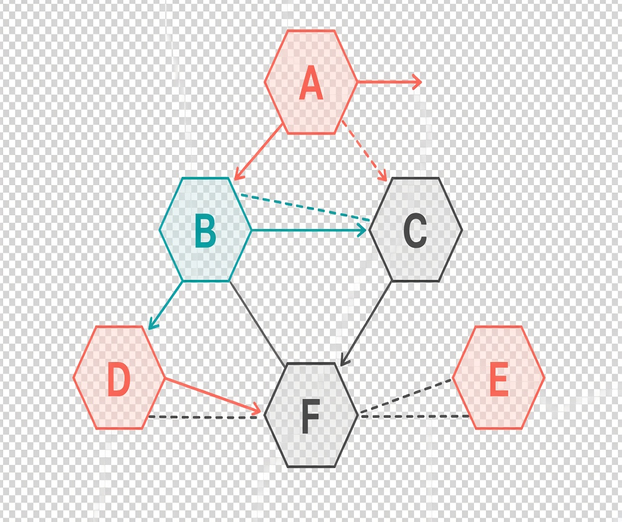
For each candidate, record pass or fail, developer effort, customer-facing friction, and costs quoted under current terms for specific events. Test a failed renewal, a duplicate webhook, an updated payment method, a paid invoice, and ledger reconciliation. Compare each duplicate event with the original event within a defined 0–24-hour test window. Verify that it cannot create a second paid invoice.
Sandbox Testing Limits
Boundary: a duplicate-webhook sandbox pass protects the tested invoice path but cannot establish a reduction in production subscription churn. Sandbox results establish how the integration behaves under the tested conditions. They provide a proven technical foundation for your application logic.
Choose an API with a controlled rollout
Select the candidate that passes critical invoice tests with a manageable migration and operating burden. Monitor a limited group before expanding the integration to the entire customer base. During the first 1–2 renewal cycles of a controlled rollout, review missed events, duplicate invoices, customer complaints, and reconciliation exceptions before adding another group.
On Monday morning in a small SaaS office, a developer checks one failed renewal in the system logs. They confirm that the customer's updated payment method successfully produces exactly one paid invoice and restores account access. Only after verifying that clean ledger entry do they enable the new billing flow for the next group of active subscriptions.