Reputation Is a Risk Filter, Not a Guarantee
Let me be plain about something before you read another word. A reputable casino is not a safe casino in the sense that you will walk away ahead. Reputation does not protect your bankroll. What it does is make the site easier to assess before you hand over a deposit, and that distinction matters more than most marketing pages want you to believe.
Think of reputation as a screening process you complete before signup, not as proof that outcomes will be favourable.
The checks I run, and the ones I'd ask any Australian adult to run, follow a clear path: legal access, operator identity, licence disclosure, payment rules, bonus rules, game transparency, support responses, and safer-play controls. All of it before an account is funded. None of it requires special tools. You can move through the footer, the terms page, the cashier information, the bonus terms, the help centre, and the safer-play page in roughly 30 to 60 minutes in one sitting.
Here is the failure case worth holding in your mind throughout. A casino can look professional, advertise large bonuses, and still be risky if the operator name is hidden, withdrawal limits are missing, or support cannot cite the rule causing a payment delay. Polish is not disclosure.
Key Takeaway: A reputable casino is transparent before you join and consistent after you request a withdrawal.
Start With the Australian Legal and Licensing Context
Start with legality, because a site appearing in your search results or accepting your traffic is not the same as a site permitted to offer gambling services to people in Australia. Visibility online proves nothing about legal availability.
Before relying on any casino's own marketing page, check the official material on interactive gambling rules from the regulator. The Australian Communications and Media Authority guidance on interactive gambling is the source I treat as the starting point for the rules themselves. This is a screening step rather than legal advice for your circumstances.
On the casino site, look for specific, verifiable details:
- A stated licence jurisdiction and the named regulator
- A licence reference where it is published
- The operator name and registered company address
- Contact details, present in the footer or the terms pages
A weak disclosure reads like "licensed internationally" or "fully regulated" with no named regulator, no operator entity, and no verifiable company address. That phrasing is a flag, not a credential.
At ProfitPHP we treat legal availability and licensing disclosure as a front-end filter, examined before bonus size, game range, or any promotional value. One practical habit: re-check licensing and access claims within a day of opening or funding an account. Availability and disclosures can change, and nobody is obliged to notify you.
Check Who Runs the Casino and What the Terms Actually Say
A reputable operator identifies the company behind the brand, not just the casino name on the logo. Verify that company before you assess a single offer.
The method is comparison. Open the footer, the general terms, the privacy policy, the bonus terms, the cashier page, and the contact page, then check that the same operator name, jurisdiction, and account rules appear across all of them. Weak operators sometimes show one name in the footer and another buried in the terms.
Some clauses deserve slow reading rather than a skim:
- Account closure rules and dormant account fees
- Bonus cancellation clauses
- Maximum withdrawal limits
- Verification timing
- Restricted payment methods
- Rules allowing the terms themselves to change
Operational weak signals tend to cluster. No effective date on the terms. Broken regulator links. Copied wording with another brand's name left in the text. Rules that can be changed without notice. Any one of these is a question; several together are an answer.
Pro Tip: Before depositing, save screenshots or a PDF of the terms applying to your bonus and payment method, captured on the same calendar day you deposit. If a dispute follows, you hold the version you actually agreed to.
Judge Bonus Fairness, Not Just the Headline Offer
A big bonus is a marketing claim. Treat it as one, and test it against the rules underneath before the number on the banner influences your decision.
Run every bonus through the same checks: wagering requirements, eligible games, game contribution rules, maximum bet while wagering, expiry date, withdrawal cap, excluded payment methods, and whether the bonus can be declined at all.
A smaller, clearer bonus can be the more reputable one. If it carries visible terms, optional acceptance, plain expiry rules, and no hidden cap on withdrawals, it beats a larger offer wrapped in vague language.
What reputable bonuses share: terms linked beside the offer, eligible games named, expiry timing stated, the maximum-bet rule visible, and a bonus opt-out explained before deposit. The red flags run the other way — headline-only offers, unclear wagering language, game eligibility that shifts, withdrawal caps buried below the fold, and support that cannot tell you whether the bonus is even optional.
Here is the trap. A bonus that looks generous becomes impractical the moment wagering rules, maximum-bet limits, game contribution rates, or withdrawal caps only surface after signup. Check the terms immediately before claiming, then again before wagering starts, because promotional pages and their linked terms do not always update at the same time.
Review Payments, Withdrawals, and Identity Checks Before You Deposit
Withdrawal handling is the strongest practical reputation test I know. Payment rules affect real outcomes after money is committed, which is exactly when a weak operator's behaviour stops being theoretical.
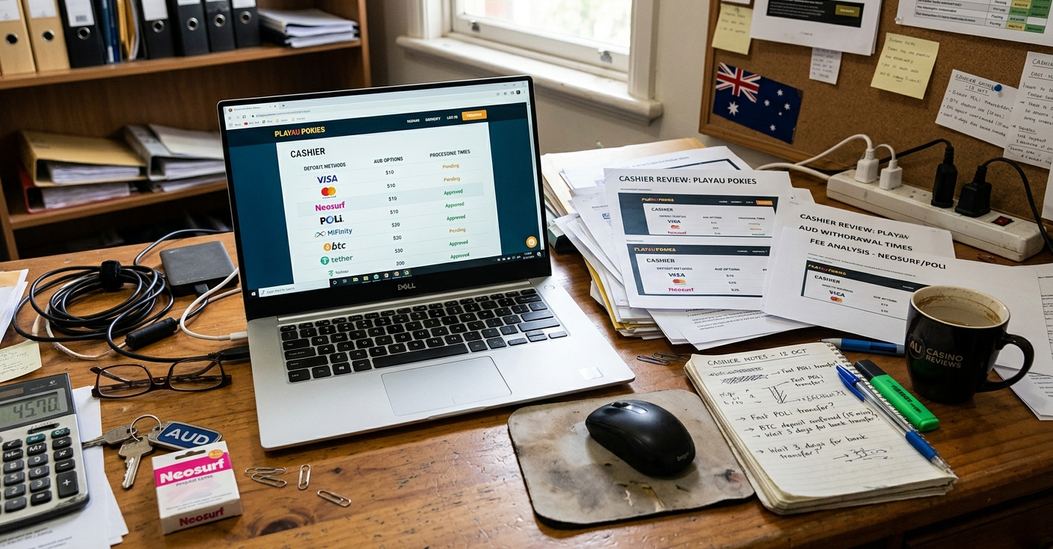
Check the cashier before you fund anything. Accepted deposit methods, available withdrawal methods, minimum and maximum withdrawal amounts, the processing window, possible fees, and whether withdrawals must return to the original payment route.
Payment reliability varies by method. Card, bank transfer, wallet-style services, and voucher-style deposits can carry different withdrawal availability, verification steps, and return-to-source rules. A method that deposits instantly may not be a method you can cash out to.
On identity verification, stay balanced. Reputable operators run KYC; that is normal and expected. What they should do is disclose the document categories that may be requested — identity proof, address proof, payment ownership evidence, and source-of-funds information where applicable. Disclosure is the standard, not the verification itself.
Risk signs to watch: missing withdrawal limits, repeated requests for the same document after it was accepted, bonus terms used to void a withdrawal without citing a clause, and support unable to state the current review stage. ProfitPHP reviews weight cashier transparency and withdrawal rules above promotional claims, because payment friction is more consequential than advertised bonus size. Before depositing, ask support for the current withdrawal review window and compare the answer against the cashier or terms page the same day.
Look for Transparent Games, Software Providers, and Fairness Information
Move past the visual lobby to the information you can actually verify. The question is simple: can you identify the game supplier, open the rules or paytable, and find fairness information where it exists? Fairness checks vary by game type, so I separate them.
Pokies
Look for named studios, paytables, feature rules, volatility descriptions where provided, and return-to-player information where the game or provider displays it.
Table games
Check house rules, payout tables, and side-bet rules. Confirm the game is a real-money version, not a demo-only listing dressed up in the lobby.
Live casino
Review studio rules, betting limits, game-round procedures, the presenter or dealer format, and how disconnections are handled. Connection rules matter more than players expect.
Roulette
Identify the variant, the table limits, the rule set, the payout table, and whether special rules or side bets change the expected gameplay.

A polished lobby is not enough if the games show no provider, no rules page, no paytable, and no verifiable fairness information. Presentation is not proof.
Use Support Quality and Complaint Patterns as Reputation Signals
Test support before a dispute exists, not after. Ask precise questions and judge whether the answer cites the relevant rule, gives a timeframe, and reads as specific rather than scripted.
Four concrete questions to ask before depositing:
- What documents are needed for verification?
- Is the bonus I'm looking at optional?
- What withdrawal processing window applies?
- How are deposit limits set or changed?
Assess the channels too — live chat, email, help centre articles, complaint escalation routes, and account-message systems where available. A useful contrast: a reputable operator explains that a withdrawal is in verification, names the missing document, and gives the published review window. A weak operator avoids timelines, changes the reason for the delay, or sends only scripted replies.
External complaints can help, but read them by pattern and recency rather than by the loudest single post. Repeated issues across the last year or so — delayed withdrawals, unclear KYC requests, bonus-rule disputes, carry more weight than one angry review. Our review-led approach weighs documented player friction, dated terms, and support clarity over affiliate offer value.
Confirm Safer-Play Tools and Know the Limits of Any Reputation Check
Close the loop with the controls that protect players, then be honest about what a review cannot do. A reputable casino makes safer-play tools visible: deposit limits, time-outs, self-exclusion options, account history, reality-check or session reminders where available, and links to gambling support resources.
Re-run the full sweep before each new deposit — legal context, operator identity, terms, bonus rules, withdrawal rules, game transparency, support quality, and safer-play tools. Reviews are time-sensitive by nature. Licensing disclosures, cashier rules, bonus conditions, game catalogues, and support procedures all change between one visit and the next.
Warning: Real-money gambling should not be treated as an income method, even at a site with clear ownership, published payment rules, and visible safer-play controls.
One honest caveat for this topic: these checks can reduce avoidable site-selection risk, but they cannot remove gambling risk, guarantee withdrawals in every case, or replace current legal guidance for your own circumstances as an Australian adult.
- Confirm the Australian legal context through official regulator guidance before relying on site visibility.
- Find the operator name, company address, licence jurisdiction, and regulator disclosure.
- Compare the footer, terms, privacy policy, bonus terms, and cashier page for the same details.
- Read the bonus rules in full and confirm the bonus can be declined.
- Check withdrawal limits, processing windows, fees, and return-to-source rules.
- Verify named game providers, rules, and paytables in the lobby.
- Test support with specific questions and check responses against the terms.
- Locate deposit limits, time-outs, self-exclusion, and support links before funding.