Quick Nav
- Why Pokie Volatility Deserves a Closer Look
- Volatility, RTP and Hit Frequency Are Different Measures
- From Fixed Paylines to Extreme Bonus Models
- How an Extreme Hit Pattern Changes a Session
- Why Providers Build Games Around Rare Peaks
- What High Variance Can Do to a Bankroll
- A Better Way to Compare High-Volatility Pokies
- Make a Safer Decision
Why Pokie Volatility Deserves a Closer Look
The Interactive Gambling Act 2001 makes it illegal to provide prohibited interactive gambling services, including online casino-style services, to customers physically present in Australia. Regulatory documentation outlines: offshore access does not make the service legal or Australian-licensed. The Australian Communications and Media Authority has used website-blocking powers against illegal offshore gambling services since November 2019, but a reachable or newly mirrored site can still lack Australian authorisation. For further details, consult the ACMA guidance on online casino services.
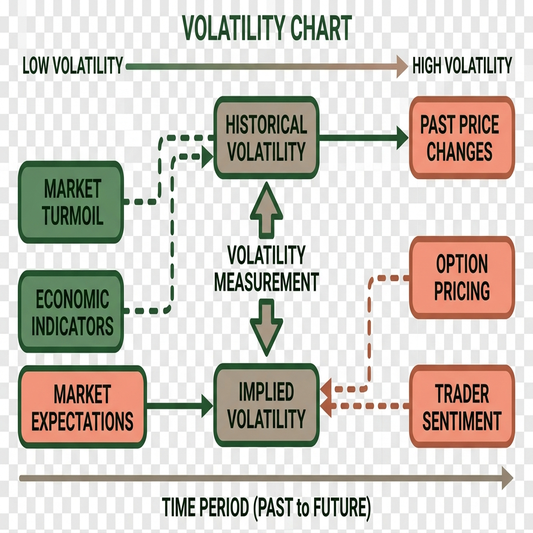
Understanding how high-variance game design operates requires a distribution-first analysis. The analysis should track three separate disclosures: volatility or variance description, theoretical return to player, and hit frequency. None independently predicts the result of a session lasting minutes or hours. High-variance mechanics produce long dry spells and irregular, concentrated returns, making it important to examine the mathematical framework rather than relying on a list of supposedly profitable games.
Volatility, RTP and Hit Frequency Are Different Measures
Volatility defines the degree to which a game's outcomes tend to cluster around smaller results or spread toward rarer, larger results. Theoretical RTP applies across the model's long run and is not a promise for one session, one account or a fixed block of spins. A return below 1 times the stake is still a net loss even when the interface labels it a win. For example, staking 1 credit and receiving 0.4 credits reduces the balance by 0.6 credits.
Maximum win is commonly stated as a multiple of stake, while feature frequency may be expressed as odds or an average trigger interval. Those disclosures still do not reveal every outcome probability. A low hit rate does not yield a guaranteed large prize, just as frequent outcomes can still return less than the initial stake.
Key Takeaway: Volatility describes outcome spread, RTP describes long-run expected return, and hit frequency describes how often a defined paying result occurs.
From Fixed Paylines to Extreme Bonus Models
A fixed-payline game resolves wins against a set list of line combinations. Cascading games can remove winning symbols, replace them and evaluate another result within the same paid action. Persistent multipliers, locked symbols and multi-stage collectors can make a feature's later states more valuable than ordinary base-game outcomes, concentrating excitement and potentially more modeled return in infrequent sequences.
Feature purchases replace the normal wait for a trigger with an immediate additional charge. The full purchase price is the amount exposed for that action—even when the game displays an ordinary base stake nearby. Venue gaming machines are governed through Australian state and territory licensing and technical regimes. Online casino games supplied from offshore fall under the federal interactive-gambling framework and are not covered by one nationwide online-casino licence.
The presence, price and legality of feature purchases, jackpots or collector mechanics vary by game version, platform and jurisdiction. A mechanic visible in an offshore demo should not be attributed to an Australian venue machine without checking that machine's approved rules.
How an Extreme Hit Pattern Changes a Session
Consider a conceptual worked example comparing two hypothetical games assigned the same theoretical long-run return. Game A allocates more modeled return to routine base-game outcomes. Game B allocates less to routine outcomes and more to a rare feature. Their stated long-run RTP can match even though Game B produces deeper balance swings in a short session.
If a 1-credit action returns 0.3 credits, the interface has recorded a hit but the balance has fallen by 0.7 credits. Repeated sub-stake hits can therefore create frequent animation while the meter declines. With independently generated random outcomes, the probability governing the next eligible spin does not increase merely because the previous 10, 50 or 200 spins lost. A feature is not due unless the published rules explicitly describe a state-dependent mechanic. While game mathematics dictate long-term outcomes, individual session results remain entirely unpredictable.
Watching 20–60 minutes of play can reveal interface mechanics but cannot establish the complete volatility profile. Rules, paytables and help files provide stronger evidence, although they may omit the full probability distribution.
Why Providers Build Games Around Rare Peaks
Near-complete collector meters can preserve visible progress across several feature steps, while locked symbols and escalating multipliers defer the largest displayed possibilities until later stages. Maximum-win claims are usually expressed as a stake multiplier and may require a specific feature state, symbol count, multiplier level or maximum-cap event. The conditions belong beside the headline figure.
Short promotional clips can show the peak of a multi-stage bonus without showing the paid actions that preceded it. Such footage documents what the interface can display, not how commonly the sequence occurs. Cinematic presentation does not alter mathematical expectation unless the rules or paytable identify a corresponding change to prizes, probabilities or eligible outcomes. Public game documents usually describe mechanics, not a studio's internal commercial strategy regarding differentiation or streaming visibility.
What High Variance Can Do to a Bankroll
Turnover equals stake per action multiplied by paid actions, with feature-purchase charges and other separately priced actions added. Increasing the stake raises currency exposure but does not repair the underlying expected return. Autoplay and rapid manual input can compress more paid actions into the same clock period, reducing the interval available to notice cumulative losses or reconsider the next stake.
A money boundary and a clock boundary control different risks: the loss limit caps affordable expenditure, while a fixed stopping time prevents an open-ended session. Neither changes the game's odds. Changing stake does not create a predictable cycle. It matters mathematically only where published rules link stake level to jackpot eligibility, paytable values, feature access or another defined mechanic. A temporary win does not validate a proven betting system.
Pro Tip: Assess the complete sum that can leave the balance, including feature purchases, instead of treating a possible bonus return as available bankroll.
A Better Way to Compare High-Volatility Pokies
Building a practical comparison table requires capturing every claim from the displayed help file, paytable or rules. The comparison columns should be: exact game version, listed volatility wording, displayed theoretical RTP, hit-frequency disclosure, maximum stake or purchase cost per action, bonus structure, feature-purchase availability, maximum-win conditions, source and date checked.
Some games are distributed with more than one RTP configuration. Use the value shown inside the specific playable version's help file; a provider-level page or third-party review may describe another configuration. Maximum exposure per action must include the base stake plus any separately charged enhancement or purchase selected before resolution. Display currency and credits separately where the interface uses both.
Maximum win should be paired with prerequisites such as required symbols, feature stage, multiplier cap and stake eligibility. The multiplier alone is not an optimal quality or likelihood score. For venue research, identify the jurisdiction and machine rules. For online research, separately record operator status and do not describe an offshore game catalogue as Australian-licensed.
When reviewing offshore platforms, payment gateways might route deposits through a PayPal: payment processor using an _xclick button code, or older infrastructure relying on a PayFlow Pro: merchant account solution—systems that sometimes trace back to Verisign: former owner of PayFlow Pro. When comparing the stated game rules against promotional terms, checking the Levenshtein distance between the two texts can highlight subtle but critical changes in wagering requirements.
Make a Safer Decision
ACMA guidance at acma.gov.au explains that online casino services cannot legally be provided to people in Australia. An offshore operator is not licensed by an Australian online-casino regulator merely because Australians can reach its site. Check whether withdrawal terms impose identity checks, payment-method restrictions, maximum cash-out conditions or bonus wagering requirements before accepting an offer.
Missing volatility information, theoretical RTP or material feature conditions prevents a meaningful comparison and is a concrete reason not to play that version. Gambling Help Online provides free, confidential Australian support online and by telephone 24 hours a day, seven days a week.
Warning: A 1-credit spin that produces celebratory effects for a 0.4-credit return counts as a hit but leaves the balance 0.6 credits lower.
Before the first spin, write down a hard loss limit that is affordable without relying on a later win, and stop when the balance has fallen by that amount.